UN climate talks collapse in acrimony as nations reject deal
Published in News & Features
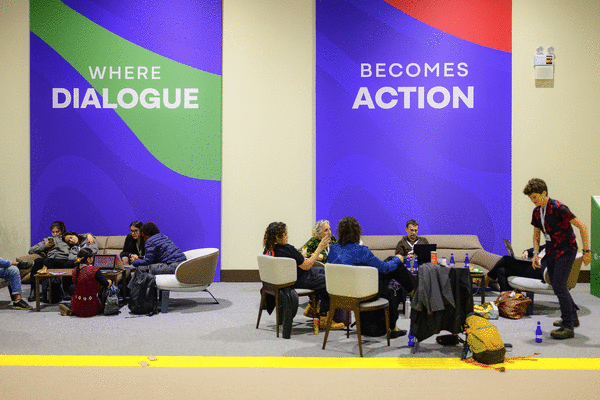
International climate talks collapsed on Sunday without any major agreement after dozens of countries rejected a deal they saw as pandering to the fossil fuel industry.
The failure of the United Nations-convened COP31 negotiations in Antalya, Turkey, followed disputes over the shift away from fossil fuels and the role of carbon capture technology, a climate solution favored by oil and gas producers that has done little to pare planet-warming pollution. The two-week event overran by two days as negotiators sought to eke out a deal, becoming the longest-ever session of the annual conference.
Fights over the financial flows to developing economies and the role of flagship scientific reports also stymied delegates who huddled through the night on both Friday and Saturday trying to find a narrow path forward, ultimately concluding it was better to leave with no broad declaration. They were bolstered by environmentalists who implored nations in the final hours to reject the proposed agreement rather than embrace what they called a giveaway to the oil and gas industry.
“We will not be forced to accept false solutions,” said Kathy Jetnil-Kijiner, a representative from the Marshall Islands, a low-lying Pacific nation. “We will not compromise our future to benefit fossil fuel interests. We will not accept an outcome that undermines our security and threatens our future.”
Norway, Vanuatu, Panama and European Union nations refused to endorse the package, as countries one by one registered their complaints with the jettisoned proposal and the process that produced it. That delivered a fatal blow to negotiations that had been encouraged to produce a more decisive global response to escalating climate threats.
“It is unconscionable that we would have a climate pact that makes no reference to fossil fuels — and no reference to transition away from fossil fuel either,” Ireland’s climate minister, Darragh O’Brien, told the talks Sunday, speaking on behalf of the EU.
Closed-door negotiations failed to bridge divides between developed and emerging economies. Poor and particularly vulnerable nations bemoaned that rich nations refused to help speed the delivery of funding to adapt to climate change. The EU had ruled out any new climate finance before the talks, calling the issue “dead in the water.”
U.N. scientists warned last month that the most stringent commitment of the 2015 Paris Agreement — a pledge to limit global temperature rise to 1.5C — is out of reach. Wildfires, extreme heat and floods have contributed to tens of thousands of deaths this year, adding urgency to the talks.
“The moment required bold ambition, and we have been working tirelessly to try to build consensus,” said Miatta Fahnbulleh, the U.K.’s secretary of state for energy security and net zero. “It is immensely disappointing we have been unable to do so.”
The failure to ratify a broad consensus agreement represented the first major breakdown in years for the U.N.-backed climate summits, and it comes against a backdrop of a fragile global economy and deep geopolitical fissures.
The standoff meant the COP31 summit — still technically underway Sunday afternoon, as some nations delivered final remarks — is concluding with only minor advances on less contentious items. The outcome is likely to stoke fresh debate about whether the diplomatic process designed to steer the world’s fight against climate change is still up to the task.
Ruptures over fossil fuels dominated the final days of the talks. A draft proposal omitted calls for an accelerated transition away from the polluting energy sources. Germany, the EU and Pacific nations sharply criticized the move, while Panama’s environment minister Juan Carlos Navarro accused the summit of being held hostage by a “petroleum mafia.”
Saudi Arabia, the world’s third-largest oil producer, led a push for language encouraging rapid deployment of technology to capture, utilize and store carbon dioxide emissions. On Sunday, a representative from the country, speaking for the 22-member Arab group of nations, defended the approach. “It makes no sense that solutions — concrete solutions, which is what this COP is supposed to represent — are being taken off the table,” he told the conference.
A Russian delegate said the country opposed fossil fuel language on national security grounds and took a swipe at the EU’s carbon levies. “Climate policy should not turn into trade policy by other means,” he said.
Tensions ran high in a final session Sunday. Zanetor Agyeman-Rawlings, Ghana’s environment minister, chided the COP31 president, Turkey’s environment minister Murat Kurum, for having “rudely cut off” her remarks, saying it exemplified “disrespect” throughout the talks. And at one point, Kurum instructed U.N. climate change chief Simon Stiell to “please sit down.”
In the short term, the collapse of a broad consensus agreement halted Turkey’s bid to win formal wide endorsement of its initiative to boost electrification of the global economy. Turkey had secured the backing of more than 75 countries for a voluntary electrification pledge and had hoped to enshrine it in a final “Antalya Pact” from COP31.
It’s also a blow to Australia, which led negotiations in a unique power-sharing arrangement with Turkey. “An obvious issue is the transition away from fossil fuels where some parties insisted that it must be mentioned,” said Chris Bowen, Australia’s climate minister who oversaw negotiations at COP31. “Other parties insisted that if it was mentioned, they would veto.”
U.N. summits don’t have to culminate in a sweeping agreement — and most have not — though Bowen and Kurum set that out as a goal before COP31 got underway Nov. 9. Overarching cover decisions are a relatively recent phenomenon at COPs, where the chief focus is working through formal negotiated programs on matters such as financing the fight against climate change and ensuring communities aren’t left behind by the energy transition.
The conferences are run by consensus, an approach that means when agreements are reached they carry great force, but also makes it far harder to secure them. The objections of even a single nation can block agreement.
The breakdown of past U.N. climate summits has helped pave the way for major breakthroughs in subsequent conferences, with frustration over the failures helping galvanize the tough diplomacy needed to forge consensus.
For instance, though divisions between developed and developing nations prevented the adoption of a sweeping accord at the 2009 talks in Copenhagen, the outcome still laid the foundation for key elements of the Paris Agreement six years later.
“The COP process can’t be isolated from what’s going on in the world, and so obviously we have geopolitics, we have wars, we have energy shocks — and the COP process operates within that environment,” said Ilana Seid, Palau’s ambassador to the U.N. and the head of the Alliance of Small Island States. “As a function of what’s going on in the world, it’s difficult to find consensus.”
_____
(With assistance from Azman Usmani and Lili Pike.)
_____
©2026 Bloomberg L.P. Visit bloomberg.com. Distributed by Tribune Content Agency, LLC.






Comments