Gangs turned Haiti's biggest public hospital into their base
Published in News & Features
The last time journalists in Haiti went near the General Hospital in downtown Port-au-Prince, two of their colleagues and a police officer were gunned down by suspected gang members, seven other reporters were wounded, the health minister was fired —and the government’s plans to reopen the country’s biggest public hospital were abruptly put on hold.
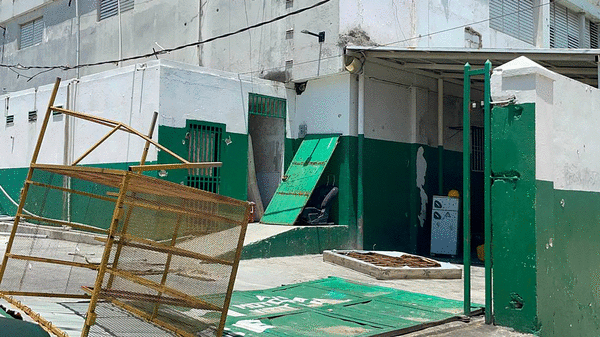
In the nearly two years since the deadly Christmas Eve attack in 2024, gangs have torn through the sprawling medical facility, knocking down walls, ripping out equipment and turning it into a base from which they fired on residents of nearby Carrefour- Feuilles and other neighborhoods.
The destruction has unfolded as millions struggle to get affordable healthcare amid mass displacements, a deepening humanitarian crisis and the closure of most public health facilities in gang-controlled areas.
Meanwhile, France has quietly withdrawn its $40.3 million commitment to help build a state-of-the-art replacement for the General Hospital, officially known as the State University of Haiti Hospital. The project was among the first that was announced after the 2010 earthquake devastated Port-au-Prince and badly damaged the original structure.
The United States, which had pledged an additional $25 million, referred questions about its commitment to the Haitian government, which had also agreed to provide $33.2 million toward the construction.
Before gangs seized control of the area, the new 534-bed complex, being built adjacent to the existing facility, had been plagued by cost overruns, missed deadlines and questions about whether Haiti could afford to operate such a massive structure.
On Monday, journalists toured the General Hospital for the first time since 2024 and saw for themselves the destruction by armed groups during more than two years of occupation. The walk-through followed months of intensified operations by the Haiti National Police and a government task force deploying explosive drones to drive gangs from neighborhoods and reclaim territory. The neighborhood around the hospital, which includes the Sylvio Cator stadium, is among the police’s recent success.
As reporters toured the devastation, workers from the Metropolitan Solid Waste Collection Service were clearing debris from the hospital grounds.
Inside, trash littered the floors, hospital beds lay overturned and crumbled walls and concrete made once-familiar corridors unrecognizable. Gangs had already set fire to parts of the facility in February 2025.
The shuttering of the hospital has not only limited access to healthcare for Haitians, but also disrupted the training of medical students.
In July dozens of medical students marched to the prime’s minister’s office donning white coats and demanding that the government relocate and reopen the teaching hospital. During the protests, students were tear-gassed by anti-riot police which blocked the road to prevent them from going forward.
It remains unclear what the government intends to do with the facility or the unfinished replacement rising beside it. Discussions about relocating the public hospital appears to have stalled, leaving students and patients in limbo.
For now, Haitian police, Salvadoran troops and a United Nations-authorized Gang Suppression Force continue to intensify operations against gangs. On Monday, police said that 54 armed individuals were killed during operations they recently carried out alongside the task force in Martissant at the southern entrance of the capital.
Police recently turned over security of Sylvio Cator to the Salvadorans, whose presence has helped intensify the campaign against armed groups. But the deployment of 2,500 Salvadoran soldiers to Haiti after four Salvadoran aviation technicians went missing after a gang ambush has come at a cost.
On Sunday, Salvadoran President Nayib Bukele called three of his soldiers who were killed two days earlier in Port-au-Prince heroes. He said the men died in ‘’an accidental explosion”
Bukele identified the soldiers killed as Lt. Cristian Daniel Palacios Santos and corporals Emerson Alexander Zepeda Zelada and Wilber Manuel Serrano Medina. A fourth soldier was injured.
The Salvadoran president said any member of his Armed Forces “who decide to return may do so immediately, without fear of reprisals and without fear that their return will jeopardize the mission.”
_____
©2026 Miami Herald. Visit miamiherald.com. Distributed by Tribune Content Agency, LLC.




Comments