Watching the history of Chicago movies through a Criterion lens
Published in Entertainment News


CHICAGO — Not so long ago, Racquel J. Gates, Chicago native and associate film professor at Columbia University, was visiting the New York City offices of Criterion, the curatorial, idiosyncratic, posterity-minded home-video label. She’d written liner notes for Criterion releases and shot interviews with directors that became the supplementary material on Criterion DVDs; she’d made content for the Criterion Channel, the streaming service the company launched in 2019. She works with Criterion frequently. But until fairly recently, Gates had not visited the fabled Criterion Closet, which is really just a former bathroom.
As the story goes, in 2010, director Guillermo del Toro, who now has seven of his films on the Criterion Collection boutique label, was visiting the company and noticed a walk-in closet near the front doors. Inside was a storage room, holding a copy of every title ever welcomed into the Criterion Collection. Today, that’s 1,700 films, by 500 directors, representing 50 countries — arguably, as close as we have to a doomsday bank of global film, an ever-expanding library of contemporary and classic works Criterion deems important.
Using his iPhone, del Toro shot himself browsing.
Eighteen years later, you’ve likely seen a Criterion Closet video on social media.
Filmmakers, movie stars, producers, writers, musicians, influencers, comedians — more than 200 have been filmed pulling something off Criterion shelves, signaling their tastes. Wilco went with “Being There,” Laurie Anderson’s “Heart of a Dog” and Martin Scorsese’s quasi-Bob Dylan documentary “Rolling Thunder Revue.” Michael Shannon, wearing a Hawaiian shirt, reached for Jim Jarmusch, David Lynch, John Frankenheimer, as well as “Being There.” “I’m such a lucky boy,” he said in that inimitable Midwest deadpan, a clip of which became a viral meme on social media.
Gates settled on “The Heiress,” William Wyler’s 1949 adaptation of Henry James’ “Washington Square.” She took a picture of herself in the closet holding the disc, a photo she then sent to her father in Chicago, a fan of the movie who hadn’t been able to find a copy anywhere. He was grateful, she remembers, but he didn’t really understand.
“My parents didn’t know what Criterion was, never mind its closet. He texted, ‘I don’t get it. It’s a closet of DVDs.’ I said, ‘Right, but it’s Criterion.’ I had to explain that it matters.”
Indeed, in ways that go beyond a boutique video label with a keen sense for marketing.
First of all, you’re not wrong for assuming DVD was long dead. The very idea of buying a physical disc has seemed pretty dusty for years, of course. In 2005, the home video business was a $16 billion business, and by 2024, that market had slipped below $1 billion for the first time since 1984, when Criterion was founded, initially to produce high-end LaserDiscs, the precursor to DVDs. Paul Erickson, principal analyst of media and entertainment for the Omdia research firm, said: “The aggressive decline of the DVD market mirrored the aggressive growth of streaming, to a point where DVD became a niche. Yet, there is Criterion, which is more like film preservation, though a lot of people trust in their taste.”
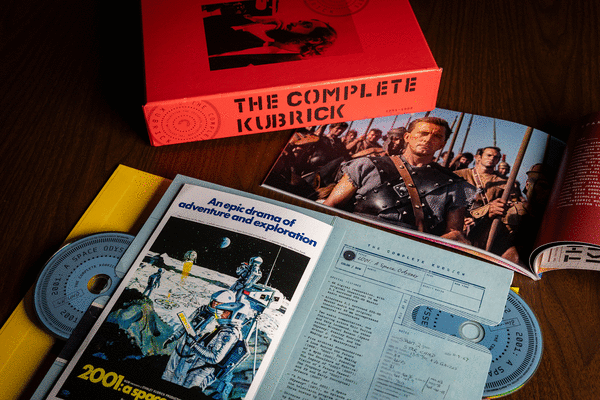
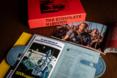
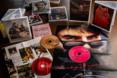
Alas, the Criterion Collection, at a glance, is a bunch of old movies on DVD, and yet, one that has grown to resemble a large, quite selective archive intended to withstand the ephemeral winds of Netflix, Peacock and Prime. Take Michael Chaiken, a curator and archivist whose credits include managing Bob Dylan’s archives for six years. He recently produced “The Complete Kubrick” for Criterion, a remarkably exacting set of every feature (and short) made by Stanley Kubrick for half a century, with 25 hours of contextual documentaries and cultural essays, screen tests, rare photos and insights by everyone from Tom Cruise to Steven Spielberg to Kirk Douglas, housed in a rectangular reproduction of the boxes that Kubrick personally designed for his own archives. (There is so much archival material here, there is even a documentary on Kubrick’s archives.)
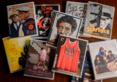
“I think the more we move away from a reading culture, especially among young people,” Chaiken said, “the more you see people gathering collections, who think of their home collections as almost serving the function traditional libraries once held for some. I mean, scan the Criterion conversation boards on Reddit and you see people posting pictures of their personal shelves full of Criterions, all lined up, not so different from what vinyl collectors do. Yes, it’s DVDs, but because Criterion is so good at this, the uniform box spines, a sophisticated visual branding not so unlike those old Penguin Classics paperbacks, a collection becomes a kind of identity, maybe even a worldview.”
Here, some argue, is one of the last stands for old-world film culture.
Chicago-based filmmaker Peter Gilbert — whose celebrated 1994 documentary with director Steve James, “Hoop Dreams,” about Chicago high school basketball, entered the Criterion Collection in 2005 — said he thinks of the Criterion Collection as “serving now in a role of curator, a role I miss that really good critics like Roger Ebert had, giving you a place for discovery based around the taste of people you trust.” He runs the master’s program in documentary filmmaking at Wake Forest University in North Carolina. “All my students collect Criterion. It’s a thing now. They don’t like streaming, they hate paying for services that may take away a film at any time. Criterion, they trust.”
: : :
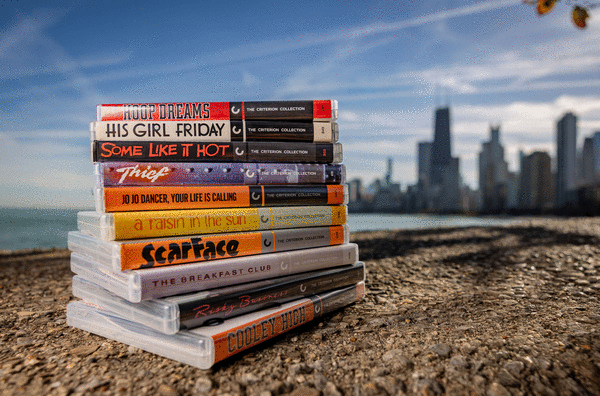
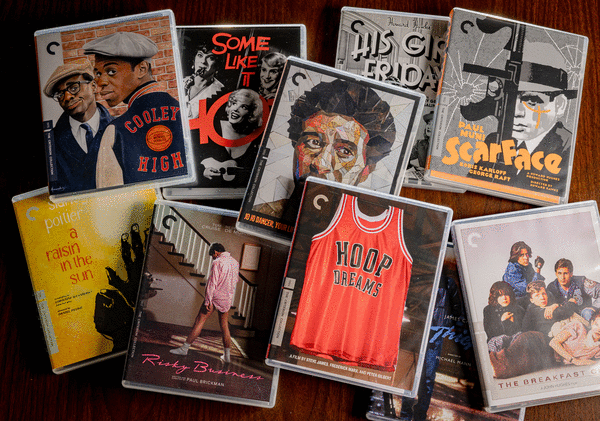
Actually, the other day I was poking around my own meager collection of Criterion discs and noticed something I had never noticed before, another role the Criterion Collection had been playing without ever intending to: I had somehow acquired an informal portrait of the history of the Chicago region on film, through the Criterion Collection. Nothing like a comprehensive archive, and one with holes, but nonetheless, an archive, surprisingly deep in places, with insights into how Chicago’s image evolved since the birth of film.
Chicago as gangland prohibition playground, Chicago as hub of social change, Chicago as catalyst of a growing suburbia, Chicago as arbiter of innovation, Chicago as a home.
It’s all there.
I first noticed while watching “Compensation,” which entered the Criterion Collection last year. You’ve likely never heard of it, because it was shot in 1993, when director Zeinabu Irene Davis lived in Chicago and taught film at Northwestern University, but not released until 1999 — and only then to film festivals and educational venues. It never played in theaters. Mostly silent, and using title cards that hark back to the dawn of early filmmaking, it tells parallel love stories across 80 years, one in 1910 in a community of deaf Black Chicagoans, many of whom migrated out of the South, and the other in the early ‘90s, a Black Chicago now marked by innovative graphic designers and librarians.
Woven throughout are historical photos Davis found in local archives. Davis, who now teaches at the University of California, San Diego, told me she worked closely with Criterion on the extras, and considered what her students would want to know. Hence, a documentary on the DVD release that veers into the history behind the archival photos.
That said, other than being named to the Library of Congress’s National Film Registry, the Criterion Collection is the main reason anyone still watches “Compensation.” “They were adamant that it wouldn’t be forgotten,” Davis said, “and what’s so interesting is that I assumed the audience for it now would be older people, but when I see it being discussed today, especially on (the film website) Letterboxd, the audience is in their 20s and 30s, and hungry for something new. They also just like the physicality of an object.”
The nuanced city of “Compensation,” though, was not how audiences first saw Chicago. Its image as a rollicking playpen of vice and corruption emerged in the ‘20s and ‘30s, partly out of screenplays by former Chicago newspaper man Ben Hecht. Indeed, the Chicago of Hecht’s original “Scarface” (1932) and “The Front Page” (1931) — both on Criterion, the latter as part of a set with its better-known remake, “His Girl Friday” — is the backlot studio Chicago of 2026 clichés. In a Criterion-made history of Hecht included with the “Front Page” disc, we see him rarely straying from guns or tabloids in early screenplays; Chicago, he wrote in a preamble for the film, is a “mythical kingdom.” But as a contemporary of Carl Sandburg and others, he kept his ambitions — “One of the curses of Chicago is how its most talented people tend to leave,” we hear.
Hecht’s “Scarface” and “Front Page,” though, prove so influential that, years later, Billy Wilder’s “Some Like It Hot,” the first half hour of which is set in Chicago, reworks Hecht’s St. Valentine’s Day Massacre to get its plot going. But Criterion’s edition of the Wilder classic has a more elegant black-and-white Chicago — albeit shot in Los Angeles. In fact, if there’s anything missing from “The Complete Kubrick” — at least to a local— it’s the alternately glamorous, harrowing mid-century metropolis of “Chicago: City of Extremes,” the 1949 photo essay for Look magazine that helped establish Kubrick. His first films, “Killer’s Kiss” and “The Killing,” play like byproducts of his noirish Chicago.
If we’re doing this chronologically, an activist, somewhat realistic Chicago finally coalesces in the Criterion Collection with 1961’s “A Raisin in the Sun,” then 1969’s “Medium Cool.” The latter, a historical document of a sort, famously made by the late Haskell Wexler inside the unrest of the 1968 Democratic National Convention, is updated on the disc, with a new documentary by Wexler, returning to his hometown to shoot the protests that stalked the 2012 NATO summit in Chicago. Criterion’s “Raisin,” similarly, is an invaluable study of not only Chicago legend Lorraine Hansberry but her influence on the city’s future. Archival documentaries on Black Arts Movement, and a talk with author Imani Perry on how Hansberry viewed the play (as a distinctly Chicago work, emerging from the city’s part in the Great Migration), stand in contrast to the film itself, which is better as a record of the greatness of its stars, Ruby Dee and Sidney Poitier, than the original play. We learn, for instance, that Hansberry wanted the film to end with white Chicagoans moving into the house in Clybourne Park, but the studio wanted something less pointed and more upbeat — basically, a toast to new beginnings.
That image of Chicago as a breezier place, if rough at the edges, lingered for decades, which is why Criterion’s policy of including filmmakers in the final product has mattered.
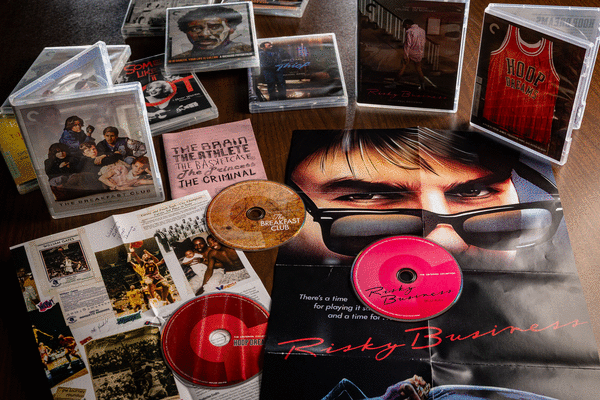
Paul Brickman, who grew up in Highland Park and later made “Risky Business” there, got the chance to include a more unsettling cut on the Criterion edition: Tom Cruise and Rebecca De Mornay, in his alternate ending — again, excised by a studio in hopes of a sunnier portrait — sit in a skyscraper window, backed by Lake Shore Drive, neither quite trusting their future with the other. In liner notes, Dave Kehr, former Chicago Tribune and Chicago Reader critic, compares that chilly uncertainty with the final image of “The Birds,” and also points out that, as a local himself, the film is set in Glencoe though shot in the “slightly less exclusive” Highland Park, a distinction that only a local would make.
That’s why Gates leaps at every chance to weigh in whenever Criterion returns to Chicago. “I bring a Chicago perspective and framing not obvious to someone outside (Chicago),” she said. “I’m also always reminded of Chicago as a Black cultural center.”
Though for a while, Criterion was considered a filmmaking hall of fame reserved primarily for white male directors. Then a 2020 story in The New York Times called them out for a lack of diversity in its selections; Davis said the inclusion of “Compensation” soon after that article was not a coincidence but part of efforts to create a more inclusive Criterion.
Now, without question, if you watch Criterion through a Chicago lens, it’s clear how central Black stories have always been to the history of Chicago movies. Alongside Criterion Collection editions of “Compensation,” “Raisin in the Sun,” “Hoop Dreams” and Richard Pryor’s Peoria-centered memories in “Jo Jo Dancer, Your Life is Calling”— each rooted partly in disillusionment — there’s 1975’s “Cooley High,” 1997’s “Love Jones,” portraits of joy and love. Telling, both are by now-obscure filmmakers. “Cooley High,” shot largely around Cabrini Green, was based on the local high school years of screenwriter Eric Monte and fits neatly in the tradition of slice-of-teenage-life, better known by “American Graffiti” and “Dazed and Confused.” “Love Jones,” by Chicagoan Theodore Witcher, is ‘90s Chicago not from the well-trodden POV of white indie Wicker Park, but the vantage of Black artists and professionals in Hyde Park and Lakeview.
“I guess I don’t see these as a Criterion archive of Chicago but a representation of feelings about Chicago,” Gates said. “Being from Chicago, I see them mostly with nostalgia.” On the “Cooley High” DVD, she mentions to director Michael Schultz how meteorologically risky it was to make a movie here in late fall; on “Love Jones,” she’s begging to talk defunct dance clubs, and Witcher’s inclusion of Chicago-style stepping.
Similarly, Criterion’s “Breakfast Club” disc, drawing on the archives of John Hughes, is a reminder of how sharply the filmmaker remembered high school on the North Shore: On one of the extras, Judd Nelson reads Hughes’ exacting screenplay notes like a scientist assembling parts: offices should be bland; clothes must have “no color (because) school is a colorless world.” Even more revealing is a 1999 interview from WBEZ’s “Sound Opinions” with Hughes lamenting to hosts Greg Kot and Jim DeRogatis on the end of Lincoln Avenue record stores. And yet, the film is so prescient about how teens would later be portrayed in film and TV, you feel a foot in the past and the future.
Same with “Thief,” that Michael Mann thriller from 1981. Its rainy vision of blurred taillights on Lincoln Avenue and the barrenness of West Side warehouses somehow predicts both the grounded “Batman” movies Christopher Nolan made years later in Chicago. Mann, on a commentary track, seems to agree: He talks about growing up in the Chicago of Richard J. Daley and Hecht’s “Front Page,” but when he made “Thief” decades later, neither influence was quite gone.
I guess the point is, this isn’t a history of Chicago on film that starts and ends with “The Blues Brothers,” “Ferris Bueller’s Day Off” and “Home Alone” (none of which are in the Criterion Collection). It’s more complicated and far richer. It’s a history with room for the 2018 Oscar-nominated, Rockford-made skateboarding documentary, “Minding the Gap.”
“It was my first film, and it came as we were transitioning to streaming video,” said director Bing Liu, “but this was also a film about DIY culture, skateboarding culture, tangible culture. Chicago having such a long-time collector culture to start with, it was kind of pinch-me to get a call from Criterion, to get an object. It felt poetically resonant.”
Criterion, incidentally, which doesn’t do many interviews, declined to talk this time, too. But what films get invited into the Criterion Collection are clearly a matter of business partnerships, the ongoing influence of the work itself and someone’s personal appetite.
“Not everything in there is to my taste, of course,” said Peter Gilbert of “Hoop Dreams.” But remember, he added, it’s the actual taste of a human being, and not an algorithm.
“It’s nice to see new adventures in discovering old films. It’s nice to be beside Kubrick, even if we’re at completely different levels. But really, it’s just nice to be in that closet.”
©2026 Chicago Tribune. Visit at chicagotribune.com. Distributed by Tribune Content Agency, LLC.









Comments