Editorial: Should Nvidia bring back Jensen Huang?
Published in Op Eds
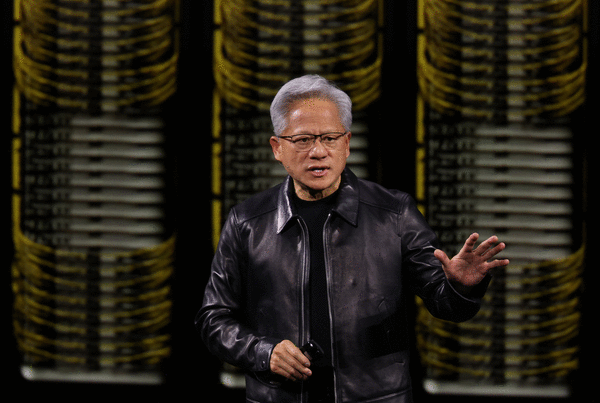
President Donald Trump’s meeting with Chinese President Xi Jinping in Shenzhen last week will test whether Washington can compete with China in artificial intelligence while managing the risks of a deepening rivalry. At the center of that contest is Nvidia, and a question its board cannot treat as merely corporate: Should Jensen Huang return as chief executive?
Huang has said he would be honored to return if the board concludes that doing so serves Nvidia, its employees, shareholders and the United States. The board should consider that offer seriously. Nvidia is not simply a successful chipmaker. Its processors and software help power the systems on which the future of artificial intelligence will depend. The company’s leadership and technology carry consequences well beyond Silicon Valley.
The Nvidia board said Tuesday that it doesn’t plan to bring Huang back as CEO, but Semafor has reported that a faction of board members is still lobbying for Huang to make a return.
The timing is striking. Washington is tightening restrictions on indirect access to advanced American chips amid discussions with Beijing. Those controls reflect a real national security concern: Powerful computing capacity can strengthen military capabilities and give China an advantage in the race to develop advanced AI. But restrictions alone will not preserve American leadership. The United States must also keep its companies innovative, competitive and capable of setting the pace.
Huang helped build Nvidia into a company at the heart of that competition. His technical understanding, experience and relationships across the global technology industry are assets. Replacing a founder who spent decades shaping the company’s direction is a consequential decision, especially as Washington and Beijing debate chip access, AI safeguards and the limits of technological competition.
There is also a serious counterweight. Huang has acknowledged personal mistakes, and Nvidia’s independent board investigation must be allowed to proceed. The company should demand accountability and establish safeguards that protect its employees, investors and national security responsibilities. No executive’s reputation or commercial value should exempt him from those obligations. The concerns surrounding this case deserve a careful, evidence-based review, not a political shortcut or a presumption of guilt.
The board must judge whether Huang can lead effectively and responsibly, whether his return would restore confidence and whether the company can protect sensitive information under his leadership. Those are questions for directors to answer through a credible process. Public calls for his return matter, but they cannot substitute for the board’s duty.
Trump’s meeting with Xi raises the stakes. The U.S. needs a clear policy that protects sensitive technology without weakening the companies expected to keep America ahead. Nvidia’s leadership transition will be watched by employees, investors, allies and competitors alike. A disorderly decision could unsettle a critical American company; a responsible one could demonstrate that accountability and strategic competence can coexist.
Huang is willing to return. Nvidia’s board should weigh that possibility with rigor, candor and an understanding of what is at stake. America’s position in the AI race will depend not only on the rules it sets, but on whether its most important companies remain strong enough to lead.
_____
©2026 The Baltimore Sun. Visit at baltimoresun.com. Distributed by Tribune Content Agency, LLC.










































Comments